
Beyond the Tracks: Navigating the Last Mile in Japan
Trains cannot take you everywhere in Japan. Here is how taxis, ride apps, and buses cover the last mile of your trip, from spotting a licensed taxi to reading a bus fare display.

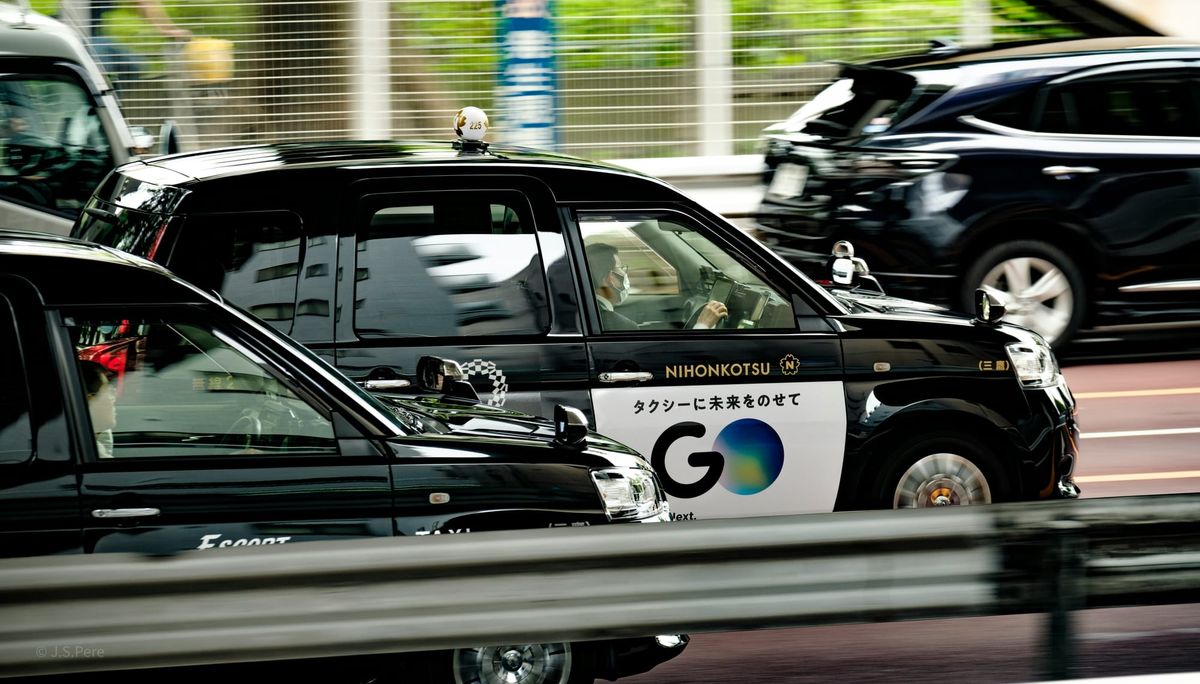
A practical guide to taxis, ride apps, and buses when the station is not close enough.
If the Shinkansen and the urban metro networks provide the rhythm of your Japanese journey, the taxi and the bus are the essential capillaries that keep you moving when the rails fall short. Even in a country of unrivaled rail efficiency, there will be moments (perhaps late on a rainy Tuesday, or when you are navigating a winding residential alley with two suitcases in tow) when you need another way forward.
Navigating this "last mile" is simpler than it seems, provided you understand the system.
The Taxi: A Study in Hospitality
To hail a taxi in Japan is to participate in a tiny, well-choreographed play. You will see them everywhere: immaculate sedans, often in black or pristine white, with drivers typically wearing white gloves and uniforms. Licensed taxis carry a green license plate and cannot solicit riders on the street, so look for a red 空車 (kuusha) sign in the windshield. It means the taxi is free. The signature move is the automatic rear door that swings open and closed with a swift, mechanical snap as you board and exit. A small but delightful hallmark of Japanese service. There is one thing you will not be expected to do: tip. Japanese taxi drivers do not take them, so the number on the meter is the whole transaction.
- The Reality: They are the gold standard for comfort and reliability, but they are undeniably a premium expense.
- The Use Case: They are indispensable for short hops that would involve multiple train transfers, late nights after the metro has closed, or when your luggage is simply too heavy to drag through a crowded station.
The App Advantage: Ride-Hailing Reimagined
If you reach for your phone expecting to summon a casual ride from a private car, pause. While services like Uber, GO, and DiDi are widely available in Japan, they function differently here. In most instances, these apps simply summon a licensed, professional taxi to your exact location.
- The Benefit: These apps remove the language barrier. You type your destination into the app, so you skip the back and forth of explaining your route on a busy street. The fare is pre-calculated or metered at the standard taxi rate, though a small pickup fee may apply in some areas on top of what you would pay from a street hail. Payment runs through the app, so there is no cash to exchange at the end of the trip.
Buses: The Local’s Shortcut
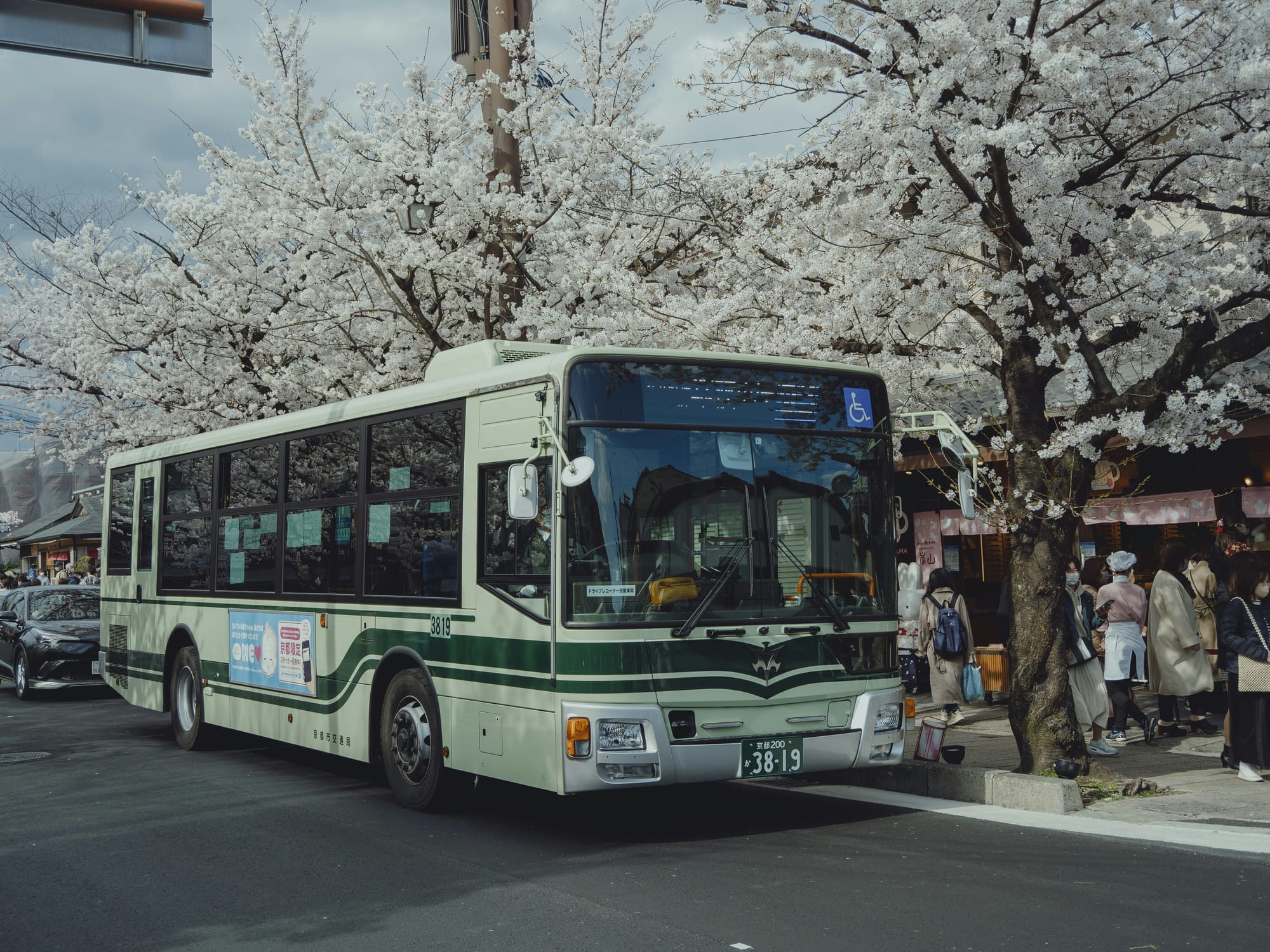
Buses in Japan often feel less intuitive than the trains, particularly because routes can be complex and traffic can be unpredictable. However, in cities like Kyoto, where the subway covers only two lines and doesn't reach top sights like Kinkaku-ji, Fushimi Inari, or Arashiyama, the bus is an essential tool.
- The Routine: This varies by region. Some buses board from the front with the fare paid on entry, while others board from the back, where you take a ticket and pay the amount shown on the display when you get off. Your IC card, that trusty Suica or Pasmo you used for the trains, works for either system: tap once on the flat-fare buses, or tap on boarding and again on exit if you are on a distance-based route. The fare is calculated automatically either way.
- The Trade-off: Buses are slower and occasionally crowded, but they provide a perspective of the city that you cannot get from a subway train. They connect you to the charming nooks and residential neighborhoods that lie just beyond the reach of the tracks.
A Final Word on Movement
Whether you are watching the suburban landscape shift through the window of a local bus, or folding yourself into the back of a taxi after a late night out, these other modes of transport allow you to navigate the country on your own terms and at your own pace.
Use the trains for the heavy lifting, but do not hesitate to call a taxi or hop on a bus when the need calls. After all, the memorable discovery might just be the one on the roads less traveled.

Visiting Japan? Peatix connects you to English Rakugo, hands-on craft workshops, bilingual comedy nights, and traditional culture experiences that locals attend all over the country.
Follow Peatix on Instagram and TikTok, or visit our website to discover Japan events locals love.