
Things I Noticed in Tokyo: The Clear Umbrella
A Tokyo family business made the first clear umbrella in the late 1950s. Today, Tokyo residents own nearly five umbrellas each, according to a 2022 survey. This guide covers the history, the etiquette, and tips for your first rainy day in Tokyo.

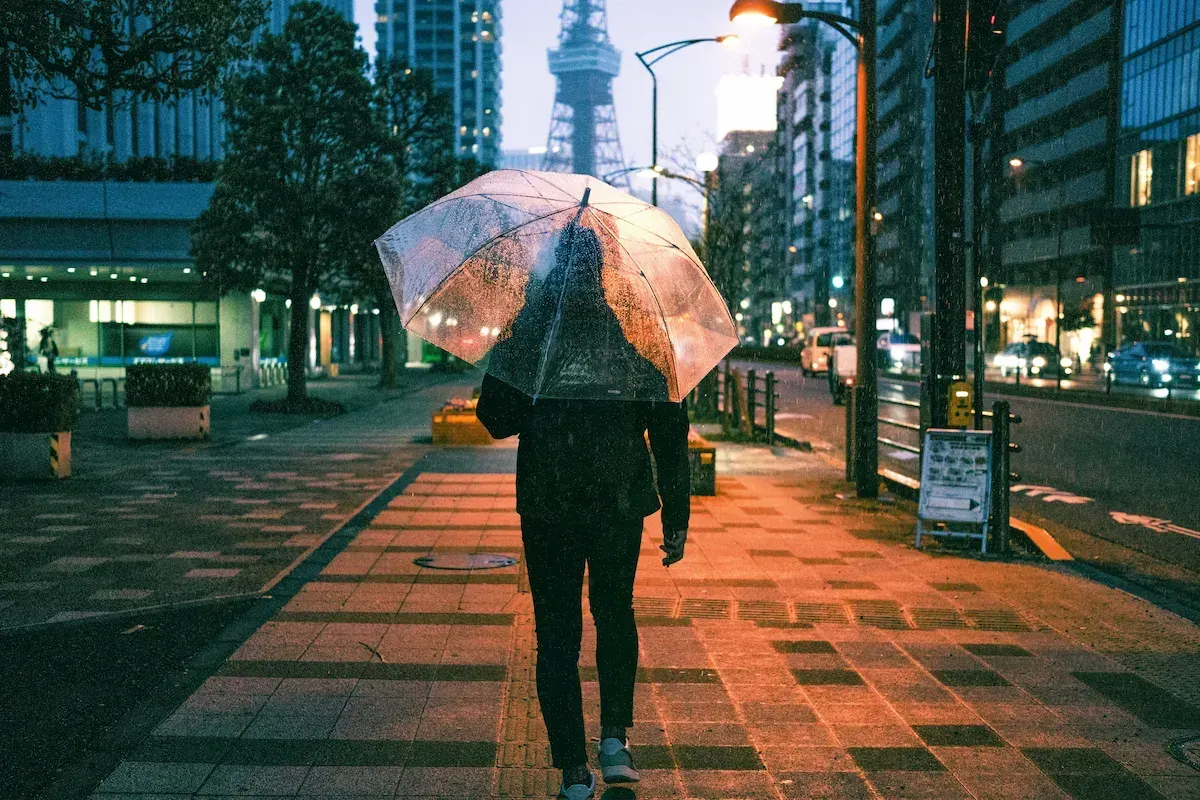
I noticed it right away on my very first train ride out of the airport. Umbrellas. Different sizes, but all clear. Interesting.
The car was full of people carrying umbrellas, many strapped to the side of a backpack like a sword in a scabbard. Odd, since it didn’t look like it was going to rain. And when I say all clear, I mean all of them. Not most. All. It was as if the entire train had received a memo that I hadn’t.
As it turns out, clear umbrellas are so common in Tokyo that locals barely register them. They cost little, sell at nearly every convenience store, and let you see what is ahead on a crowded sidewalk. For a visitor, though, that still leaves a few questions. Where did they all come from? Why bring one on a dry day? And how does anyone ever find their own again?
Where the clear umbrella came from
The clear umbrella was born in Tokyo, and like many great inventions, it started with a tablecloth.
The credit goes to White Rose, a family business founded in 1721 that started out as a tobacco merchant before moving into rain gear. During the Edo period (1603 to 1868), it made folding raincoats of oiled paper that proved popular with samurai, which is a sentence few companies can put on their website.
After World War II, White Rose was making vinyl covers to protect cloth umbrellas. Then nylon came along, and nobody needed a cover anymore. Inspired by the vinyl tablecloths brought to Japan by the occupation forces, the family tried something new: they skipped the cloth entirely and attached the vinyl straight to the frame. By the late 1950s, the world’s first plastic umbrella was born.
Japan’s umbrella industry was not impressed, at least at first. The big break came during the 1964 Tokyo Olympics, when an American buyer spotted the umbrellas and took them to New York. Once they were a hit abroad, they caught on at home too.
The ending is a little bittersweet. As cheap, mass-produced versions flooded in from overseas, more than 50 Japanese makers dwindled to one. White Rose is still in business, now making premium, repairable clear umbrellas that are built to last, which is a bold stance in a market that treats them as disposable.

Why people in Tokyo own so many umbrellas
Japan takes umbrellas seriously. A 2022 Weathernews survey found that people in Japan own about 4.2 umbrellas each, and Tokyo residents average closer to 4.9. That’s a lot of umbrellas for one person with two hands.
It also explains my train car. When you own nearly five umbrellas and the weather can turn in an afternoon, bringing one along on a dry day is less a precaution than a habit. So the people on my train were probably not expecting rain. They were just ready for it.
The clear umbrella earns its spot in that collection for a few reasons.
- It is cheap: You can buy one at almost any convenience store for about 500 to 1,000 yen. When a sudden shower hits, the decision makes itself.
- You can see through it: On a packed sidewalk, a clear canopy lets you spot the cyclist, the curb, and the person about to turn left without warning. It also makes you visible to drivers.
- It is always there: With a convenience store on what feels like every corner, you are never more than a few minutes from a dry walk home.
There is a flip side. According to the Japan Umbrella Promotion Association, people in Japan purchase an estimated 120 to 130 million umbrellas a year. And many of them simply get left behind. In 2023, about 300,000 umbrellas were turned in to the Tokyo Metropolitan Police lost and found center, and only around 3,700 made it back to their owners. The center devotes about 200 square meters to umbrellas alone, which makes it one of the most heavily stocked umbrella shops in the city, and possibly the least visited.
So how does anyone find their own again? Mostly, they don’t. The few who do usually mark theirs first with a sticker or a bit of tape on the handle.
Umbrella etiquette
With so many umbrellas in circulation, Japan has developed a quiet set of rules for handling them. Nobody hands you a manual. You just notice that everyone else seems to know what to do.
- The sleeve: Many shops, department stores, and offices keep a stand of long, thin plastic bags by the door. Bag your umbrella on the way in so it does not drip on the floor.
- The stand: Restaurants and smaller shops often have an umbrella rack outside, sometimes with little locks and numbered keys. If there is a lock, use it. If not, leave yours anyway. It’s a 500-yen umbrella.
- The carry: When it is folded, hold your umbrella pointing down, not tucked sideways under your arm. On a crowded escalator, the person behind you will appreciate keeping their eyes safe.

Good to know
- When to expect rain: The rainy season, called tsuyu, usually arrives in early June and lasts until mid or late July in Tokyo. Typhoon season follows in late summer and early fall. Find indoor events in Tokyo on Peatix.
- Where to buy one: Any convenience store, drugstore, or station kiosk. They tend to move the umbrellas front and center the moment the sky turns gray.
- Make it yours: A sticker, a bit of washi tape (decorative Japanese paper tape), or a ribbon on the handle will help you pick yours out of a rack of identical twins.
- Keep it with you on the train: If you leave one behind, tell station staff. Unclaimed items go to the Tokyo Metropolitan Police lost and found center after two weeks.
- Consider an upgrade: If you want a souvenir that will outlast your trip, a sturdier clear umbrella or a traditional Japanese paper umbrella makes a far better story than a forgotten one.
- Carry a cold drink too: Read how Aquarius and Pocari Sweat compare.
The clear umbrella may be the most humble object in Tokyo, but it carries a surprising amount of history: an Edo-era family business, a postwar tablecloth, an Olympic sales pitch, and a lost and found center full of good intentions. Next time the rain starts, take a look at that sea of clear domes. Every one of them is a small piece of Japanese design, even if most of them will be left on a train by Friday.
This is part of Things I Noticed in Tokyo, a series about the things that seem completely normal if you live in Japan, and completely fascinating to everyone else.
Clear umbrellas in Japan: common questions
Q: Why do people in Japan use clear umbrellas?
A: They cost little, sell at nearly every convenience store, and let you see people and bikes ahead on crowded sidewalks.
Q: Who made the first clear umbrella?
A: White Rose, a Tokyo company founded in 1721, made the first plastic umbrella in the late 1950s.
Q: How much does a clear umbrella cost in Japan?
A: Convenience stores sell them for about 500 to 1,000 yen. Some 100-yen stores sell cheaper ones.
Q: When is the rainy season in Tokyo?
A: Tsuyu runs from early June to mid or late July. Typhoon season follows in late summer and early fall.
Q: What do you do if you leave an umbrella on a train?
A: Tell station staff. Unclaimed items go to the Tokyo Metropolitan Police lost and found center after two weeks.
Sources
- Clear Protection: Redefining Japan’s Plastic Umbrella, Tokyo Updates
- White Rose, Kirari Store (Tokyo Metropolitan Government)
- Living Traditions: White Rose, Monocle (sponsored content by Edo Tokyo Kirari)
- White Rose and the plastic umbrella, The Japan Times
- Umbrellas and Parasols in Japan, Nippon.com
- Japan’s annual umbrella consumption (in Japanese), Business Insider Japan
- Tokyo police care for lost umbrellas, AFP via eNCA