How Takuya Yoshida Built Japan Village, Brooklyn's Most Authentic Japanese Community Space
Takuya Yoshida and his family built Japan Village across two generations, now New York's most authentic Japanese community space.
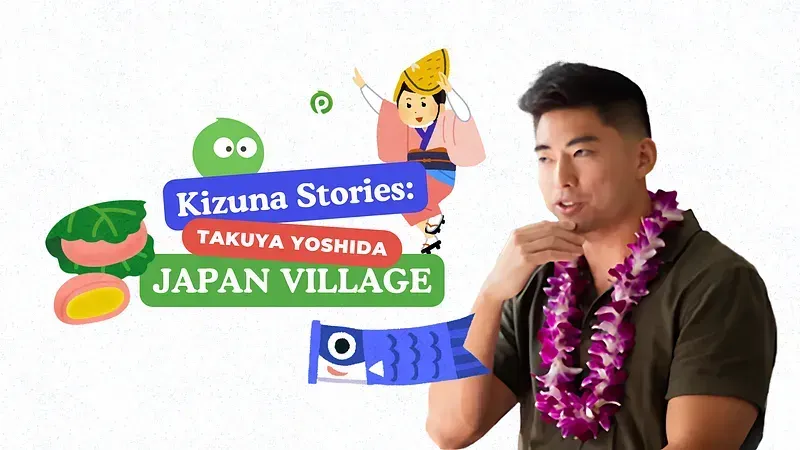
Kizuna Stories: Discover the Unique Charm of Japan Village, Brooklyn’s Most Authentic Japanese Cultural Experience
How two generations built New York’s most authentic Japanese community space
Step into Brooklyn’s Industry City and you’ll find yourself transported straight to Japan. At the heart of it all is Japan Village, a vibrant food hall, market, and cultural hub that has become the gathering place for people seeking authentic Japanese culture.
But this story didn’t begin in Brooklyn. It started decades earlier in the East Village, where Tony Yoshida opened Sunrise Mart as a lifeline for the Japanese community. What began as a small grocery store has now blossomed, thanks to the vision of his son Takuya, into a 50,000-square-foot space dedicated to celebrating Japanese culture.
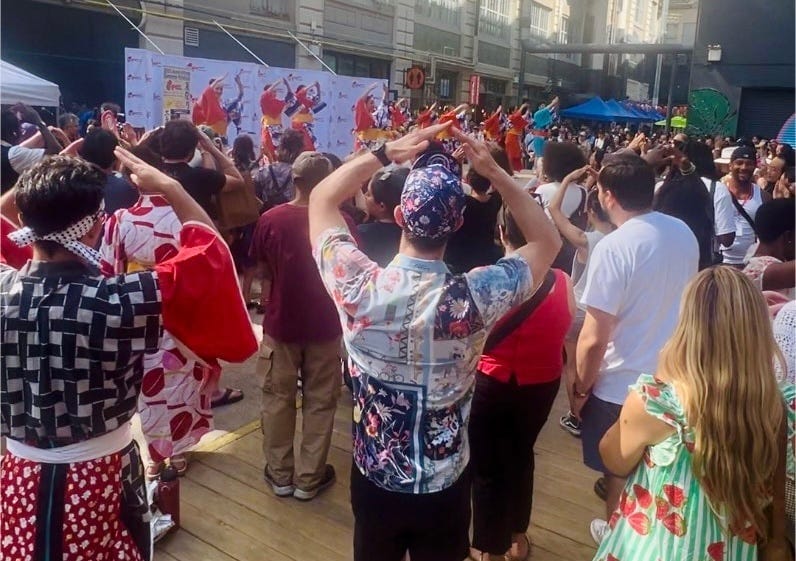
This summer’s Japan Village festival drew thousands, proving that Japanese traditions don’t just endure in New York — they thrive.
From $100 to Cultural Pioneer
With just $100 in his pocket, Tony Yoshida arrived in New York. He spent it all on a hotel room in one week, then worked 16-hour days washing dishes. But Tony had bigger dreams.
“He always had the Japanese community in mind. Back then, there weren’t many Japanese grocery stores. So he decided to open one on the second floor in the East Village for safety reasons,” Takuya explains.
In 1995, the East Village was considered a dangerous area. “People had a concern that if you opened your wallet in public, people might try to rob you.” The second-floor location wasn’t about visibility — it was protection. “If you take an elevator to the second floor, you already know who’s in the proximity around you, but they can’t look into the store and wait for you to come out.”
Tony protected his community directly when necessary. When John Belushi came into the restaurant Dojo intoxicated, “my father decided to kick him out using a wooden sword. And that became an SNL skit.”
“Back then, pretty much everyone knew each other. But it was so dangerous that it wasn’t like somewhere you would go out and try to start a business on your own.”
Building the Next Generation
Tony’s training started before Takuya even realized it was training. “I don’t really recall to that much extent,” Takuya admits, “but managers or other people tell me that when you were little, your father would ask you how you would stock this item on the shelf.”
Even as a child, Tony was turning everyday moments into business lessons, asking questions that seemed casual but were actually shaping how his son thought about operations. Summer jobs became Takuya’s playground, and he loved the physical challenge and unpredictability. “It was kind of like, you’re racing against yourself. Just try to stock a shelf as fast as possible,” he explains. What looked like child’s play was actually a masterclass in work ethic and efficiency.
After grad school, Takuya approached the family business methodically: “So from the very beginning I told myself, if I felt like I couldn’t add more value to his business, then I wouldn’t do it.”
He spent a year in the Sunrise Mart Soho kitchen, “doing literally everything from the floor, taking out garbage,” earning respect from decades-long employees. “I wanted to sort of pay them back, too, for being so loyal and helping my father achieve what he has today.”
Tony’s influence reached unexpected places. While studying in Japan, Takuya discovered a Tokyo cafe owner had been inspired by Tony’s restaurant Dojo. “I never imagined that he would have such an extended influence overseas, even in Japan.”
Creating “Tokyo Without the Jet Lag”
Japan Village operates in a unique way, different from the scattered East Village businesses. “Back then, it was more like separate business establishments in a row that were next to each other, but then it wasn’t really necessarily part of each other,” Takuya explains. “So now we can provide more of the cultural aspect of Japan and not only through food.”
The consolidation follows a strict philosophy: no internal competition. “We don’t let any business compete with another business because we want everybody in Japan Village to be as successful as possible.”
Complementary businesses work together. Book Off handles used products while Bandai Namco sells original items. “It works in a cycle. If you go to one establishment, most likely the same customer might still make a trip to another establishment.”
The comprehensive experience at Japan Village is intentional. “You could spend literally a whole day here,” Takuya says. “So you could buy your groceries at Sunrise Mart, go to the food hall, get lunch, eat whatever, many options. We also have the second floor, where we feature all retail shops. This includes an origami class workshop and a shop that curates and specializes in products specifically from Japan. And then we have Bandai Namco, Book Off, Daiso.”
Their landlord provided the perfect tagline: “Tokyo without the jet lag.”
“So I think if someone says to me, ‘we can just go to Japan Village instead of going to Tokyo,’ that would be the biggest compliment.” — Takuya Yoshida, Japan Village
The Challenge of Authenticity
Maintaining authenticity in the United States presents complex challenges. “It’s a good and bad thing that people go to Japan a lot now because in Japan everything is such high quality, but then the food’s also cheaper than what you can get here,” Takuya acknowledges. “So providing that value to customers is honestly pretty difficult.”
The name creates expectations. “So, because we named ourselves Japan Village, people come here expecting a Japanese village. So, we’re kind of digging our own grave by giving ourselves such a big name.”
Service standards present the biggest challenge. “In Japan, everyone gives exceptional customer service from the beginning to the end, and they don’t even make tips. So, how do we educate and train our staff so that they can reach that standard?”
Cultural differences require patience. “In Japan, the kids are expected to clean the hallways of the classrooms, so that’s not something you grow up doing in the US.”
Japan Village addresses authenticity through expertise. “For tea, we have a tea master who trained and learned everything in Japan but is now located in New York City.”
Programming That Educates
Japan Village prioritizes education over entertainment. “We try to value authenticity over appealing to the mass crowd because we’re trying to encourage people to become more interested in Japanese culture and even hopefully promote people to go to Japan.”
“We don’t necessarily have as many innovative or Instagrammable dishes that you might find in another New York City izakaya. But I think, if someone from Japan comes here, they’ll say, ‘this is just like an izakaya in Japan.’”
During Hinamatsuri (Girls’ Day), the process includes education: “So we would make fresh mochi from the mochi rice, and then we would pound it, and we would wrap it in cherry blossom leaves, and then we would give it to customers. So, we try to play an educational video in the beginning or describe the actual holiday and what it means.”
The impact resonates deeply. “There was one family who always came to events and, one time, they just thanked us for always celebrating these holidays because I think those things you can’t really experience in New York City.”
The sumo competition surprised everyone. “We had a sumo competition where there were different weight classes, and we didn’t know what to expect, but I think we had thousands of people that came to watch.” The event earned New York Times coverage.
Recognition and Growth
At 80, Tony continues to come to work every day. “He loves it. He enjoys it the most when we’re having events and he sees people enjoying themselves. And he’s also finally getting the recognition he deserves. We’re meeting government officials and working closely with the ambassador of Japan.”
Japan Village now serves as a testing ground for Japanese companies entering the US market.
Takuya’s ultimate goal reflects his ambition: “So I think if someone says to me, ‘we can just go to Japan Village instead of going to Tokyo,’ that would be the biggest compliment.”
Rather than competing with other Japanese cultural events, Japan Village welcomes them. “I think the great thing is that it is promoting Japanese culture at the end of the day, which is our biggest mission.”
The Community Impact
Japan Village’s summer festival showcases the remarkable growth of this community. Thousands now gather to celebrate Japanese culture together, with families learning traditional dances and children experiencing authentic Japanese games for the first time.
“The second you walk in, you’ll see people maybe dressed in yukata, traditional summer, maybe even wearing wooden sandals. And then you’ll be able to see kids enjoying yoyo, which is fishing for a bouncy ball, cotton candy, beer for adults, beer and sake, and then we’ll have a stage with traditional dance performances.”
Tony’s vision of creating a safe space for Japanese culture has evolved into something that connects thousands of New Yorkers to authentic cultural experiences, proving that genuine traditions can flourish when nurtured with care and respect.
Visit Japan Village
Japan Village is located at 890 3rd Ave, Brooklyn, NY 11232, within Industry City. They host regular cultural programming, seasonal celebrations, and workshops throughout the year. Follow Japan Village on Instagram to stay up to date on their latest events and programming.
Visiting Japan soon? On Peatix, you’ll find authentic workshops, seasonal festivals, and community events that offer real cultural connection — not just surface entertainment. It’s the perfect way to experience Japan as locals do.
Follow Peatix on Instagram or visit our website to discover Japanese cultural events.