
How Oscar Dolan Built NYC's Only Sumo Wrestling Community
Kizuna (絆) means bonds in Japanese. Oscar Dolan built the only sumo wrestling community in NYC around exactly that idea.


Kizuna (絆) means “bonds” or “connection” in Japanese. This series celebrates the deep connections people create through authentic Japanese culture, wherever they are.
Every week, about fifteen people meet in a Manhattan studio to practice sumo wrestling. Most New Yorkers don’t know this exists. Three years ago, it didn’t.
“There wasn’t sumo in New York before me,” Oscar Dolan says. “I figured, New York, of all places, there must be already a sumo club. But somehow there wasn’t.”
So he started one. In March 2022, Dolan wrapped a thick cloth around his waist, drew a circle in Brooklyn’s Prospect Park, and held the first meeting. Today, over 100 people have tried it. About 40 come regularly. They have a permanent space in Manhattan.
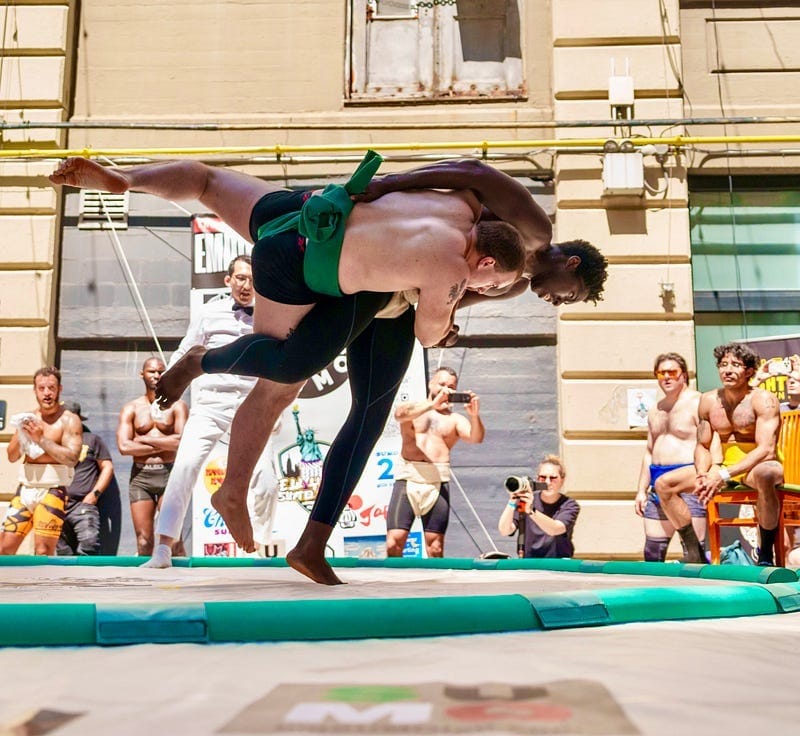
From Student to Teacher
Dolan studied Japanese language and linguistics at SUNY Binghamton. He took two trips to Japan in 2017. His entry into sumo came through academic research on Enho, a lightweight wrestler who was having success at the time. Watching tournament coverage, Dolan got hooked.
But watching and doing are different things.
“I bought a few belts… made a few posts on Reddit, waited a really long time, and eventually got one guy. Waited a lot more time, got two guys, super slow, but eventually, once I’d put all the work in of starting it, just getting a few guys, learning the very basics, I was just too far in to switch to something new… I was way too deep and committed to it,” Dolan recalls.
More Than Sport: Preserving Ancient Philosophy in Modern America
Here’s what most people don’t understand about sumo: it’s not just wrestling. It’s bushido: the way of the samurai. Practitioners train for complete emotional control with no reaction to victory, defeat, or injury.
“Honorable fighting is a pretty universal concept, regardless of different cultures,” Dolan notes. “When someone hears honorable combat or honorable fighting, that’s the image that comes into your head… It’s pretty much the same around the globe.”
Every session follows specific protocols:
- Respect for the training space and other people
- Respect for opponents regardless of size or skill
- Hand clearing ceremony (showing you carry no weapons)
- Bows before and after
- 1,300 years of tradition compressed into a 15-meter circle
The club draws office workers, artists, and students. Ages 11 to middle age. Most have martial arts backgrounds, including judo and Brazilian jiu-jitsu. They’re looking for something their other practices don’t provide.
The 11-Year-Old
Recently, an 11-year-old Japanese boy named Koji joined. He weighs about 80 pounds.
“He was thrilled, you know, brought me back to when I used to have energy for things… remember when anything we did, we were just happy and like constant novelty. He was just that fighting spirit embodied as youthful vigor. So refreshing,” Dolan recalls.
Real cultural practice creates connections across age, background, experience, and a shared commitment to something bigger than yourself.
Ironically, Japanese participation stays low with fewer than ten people total. Japanese immigrants often associate sumo with traditional values and older generations. There’s a distance from contemporary practice.
But the club has hosted notable visitors, including Taiga Iizuka, former coach of Keio University’s sumo club. His demonstration showed what Dolan calls pound-for-pound the strongest sumo wrestling currently practiced in the US.
Learning the Hard Way
Dolan’s approach to teaching was trial and error:
“I would just fake knowing every single thing until someone who knew better told me a different way, and then I’d just change it and keep rolling with that. It’s taken several iterations.”
Eventually, he connected with Konishiki, the Hawaiian former Ozeki (second-highest rank in professional sumo). That relationship validated the club’s foundation and provided elite-level guidance.
The distinction matters. “Grand sumo is a tradition and a sport. Amateur sumo is just a sport,” Dolan explains. Professional sumo encompasses “all the ceremonies, all the traditions, everything that’s been done the same way for 1,300 years… every single aspect of sumo, bar none.”
Amateur practice focuses on the sporting fundamentals while preserving essential cultural elements.
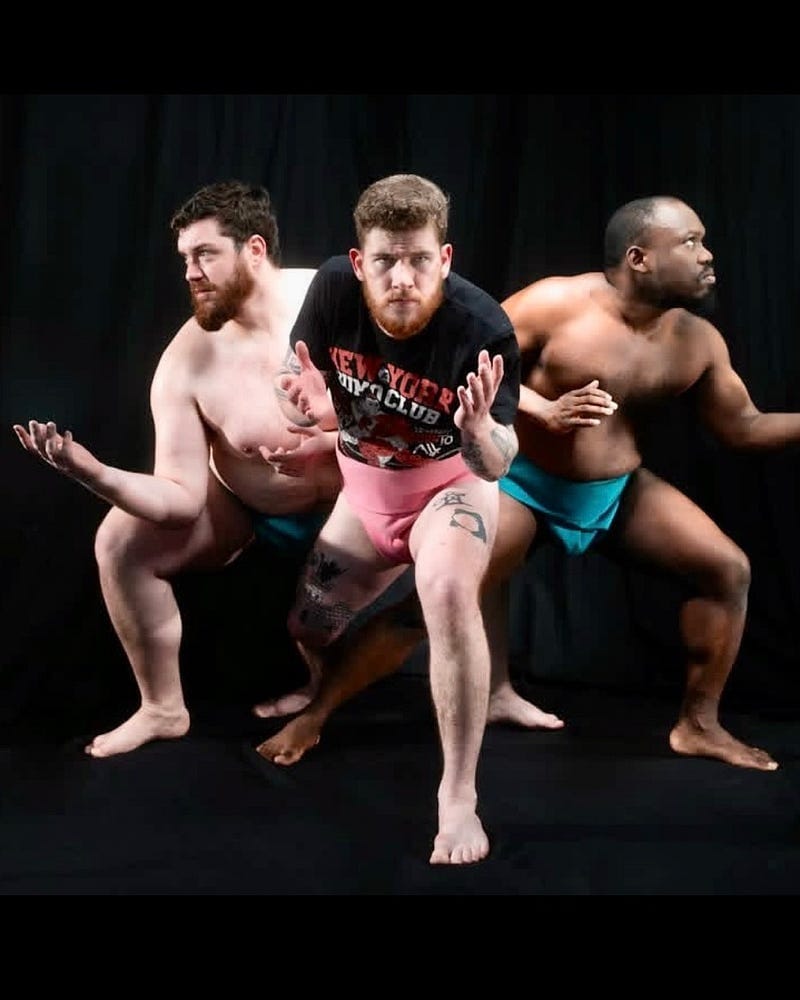
“It’s our white whale. It’s impossible to find someone who looks like a sumo wrestler, is into sumo, and is in New York — fills all three boxes.” — Oscar Dolan, NY Sumo Club
The White Whale Problem
Finding the right people remains a challenge:
“It’s our… I want to say white whale. It’s a bit on the nose, but it’s impossible to find someone who looks like a sumo wrestler, is into sumo, and is in New York — you know, fills all three boxes.”
This scarcity hasn’t hurt growth. If anything, it’s strengthened community bonds. Members aren’t casual participants. They’re committed to something rare and demanding of genuine respect.
Why This Matters
People want real experiences: people crave real cultural experiences that challenge them physically, mentally, and spiritually. In an age of digital distraction and surface-level engagement, authentic practice still matters.
Whether you’re drawn to sumo, tea ceremony, calligraphy, or traditional crafts, passionate communities are preserving and sharing Japanese culture worldwide.
The club demonstrates what happens when someone refuses to accept that something doesn’t exist and decides to create it themselves.
Connect with Authentic Japanese Communities
Ready to discover authentic Japanese cultural experiences in your area? The New York Sumo Club demonstrates what’s possible when passionate people create spaces for genuine cultural connection — precisely the kind of community that Peatix helps people find and join worldwide.
NY Sumo Club Details:
- Instagram: @NYSumoClub
- Facebook: New York Sumo Club
Experience Japan — Wherever You Are:
- Explore Events in Japan with Peatix
- Instagram: @Peatix
How to Find Japanese Cultural Communities
Q: How do I find real Japanese cultural experiences?
A: Look for groups that emphasize cultural education alongside activity, maintain connections to Japanese sources, and welcome genuine learners over casual participants. Platforms like Peatix feature such experiences worldwide.
Q: What makes this different from other martial arts communities?
A: The New York Sumo Club combines physical training with Japanese cultural education, emphasizing bushido philosophy alongside technique.
Q: How can I host my Japanese martial arts event?
A: You can organize workshops, demonstrations, or community gatherings. Peatix provides tools and guidance for creating cultural experiences.
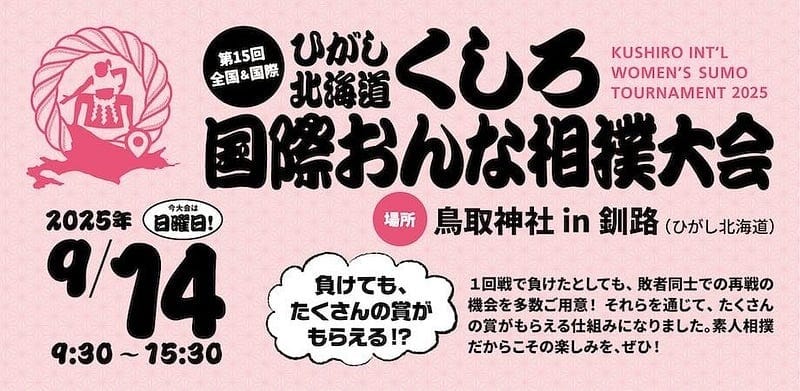
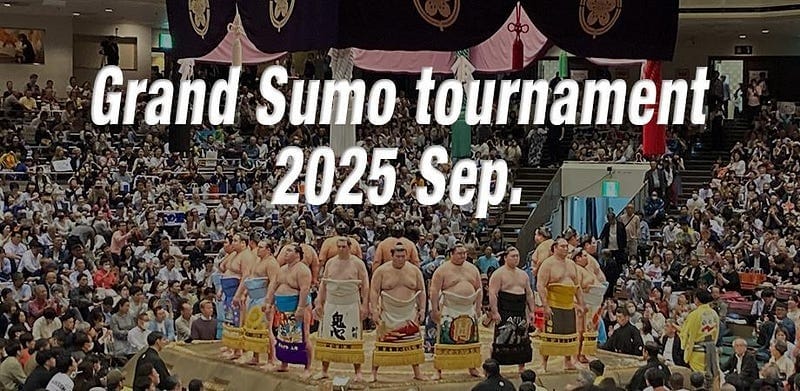
Q: Are there sumo events I can attend? A: Yes! For local events, check the @NYSumoClub on Instagram. For authentic, one-of-a-kind sumo experiences in Japan, here are some upcoming opportunities:
The New York Sumo Club shows what’s possible when someone refuses to accept that something doesn’t exist. Whether you’re seeking sumo training, workshops, or community gatherings, Peatix helps you discover people preserving Japanese traditions worldwide. Because the most extraordinary communities often start with just one person’s impossible dream.