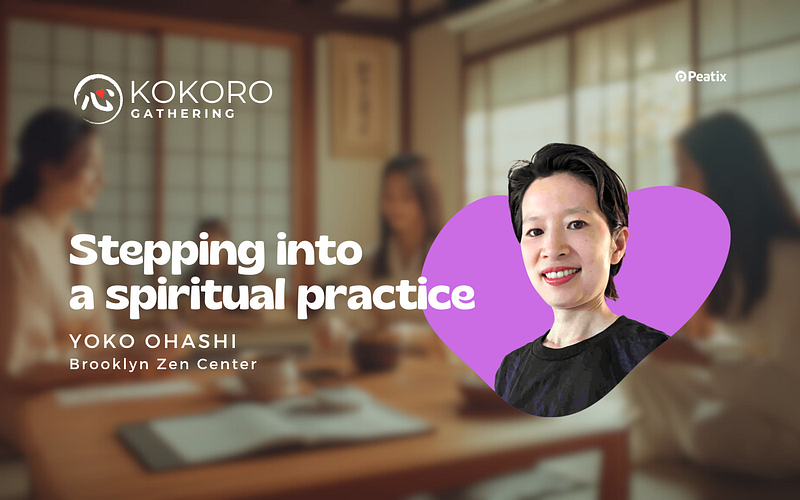
Stepping into a spiritual practice with Yoko Ohashi
Brooklyn Zen Center community leader and chaplain Yoko Ohashi’s journey from Osaka to New York spans art, spirituality, and community leadership. Originally trained in fine arts, she now blends creativity with Buddhist practice as a leader at Brooklyn Zen Center and a Master of Divinity student. In this conversation, she shares her path to chaplaincy, the challenges women seek to resolve and how to take the first step in that direction.
What inspired your shift from the fine arts to spiritual leadership and chaplaincy? Was there a defining moment?
It was a very organic transition from visual arts to wellness actually. Because visual arts for me is about tuning into what feels alive within myself and expressing that visually and so, it started from there.
I went to liberal arts college and the professor just directed us to look at the lines actually he started with a looking lines of the fingers like this without looking at the paper. So, you just follow the lines and that just being one with that line, the movement was so much fun. It spoke so much to the miracle of life and that just did it for me. It was like something really became alive for me in a way that it’s never been before in my life. Pursuing that sense of aliveness or wonder of life by visual arts eventually led me to explore my deep inquiry on how does what our body relate to conceptual things like language or thoughts our thoughts or the way that we organize things like numbers and money all these things.
Can you tell me more about the Brooklyn Zen Center and the chaplaincy work that you do there?
I started to consider becoming a priest and I also started to become interested in rituals when I found myself sitting in that very close quarter of life and death. Supporting people that way started to really intrigue me. One day Brooklyn Zen Center got a request from someone who was a sister a who happened to be dying and was of Japanese origin. I assisted this family and that experience affirmed the feeling that I could do this. That’s one thing and another important thing is I am diagnosed with blood cancer. Since the diagnosis four years ago, my relationship with the process of the imminency of death changed.
We all know that we’re going to die someday right but as human beings we don’t really think about it, unless we’re heavily ill or we’re diagnosed with cancer or unless our close one dies. I think that we tend to procrastinate the urgency of death. And so this journey has been really helpful in terms of considering that in most intimate way so that we can really fully live our life right now.

What are some common challenges that women bring to the table at Brooklyn Zen Center and how do you help navigate them?
Most women we don’t express the feeling of anger in general because we don’t know how to tune into rage. I do feel that these energetic qualities of anger or rage is not just what has happened to us, but we’re also embodying what’s being passed on by our ancestors.
I really feel that finding that intensity in us and tuning into it and giving a full expression of that in a safe way is a really important process for us to get liberated. Unless we know how deeply we’re powerful and we feel comfortable with our rage or comfortable with the intense energy of anger, I don’t think we can really come forward and express ourselves because we can’t feel that energetically.
Can you give us one example?
I think that the first step is to really able to notice when you are angry or when you start to feel that way and it’s a practice of really welcoming that in the beginning if you’re repressing it and if you are actually familiar to some extent then start to find a space where you can feel it in your body. In small doses you can do that.
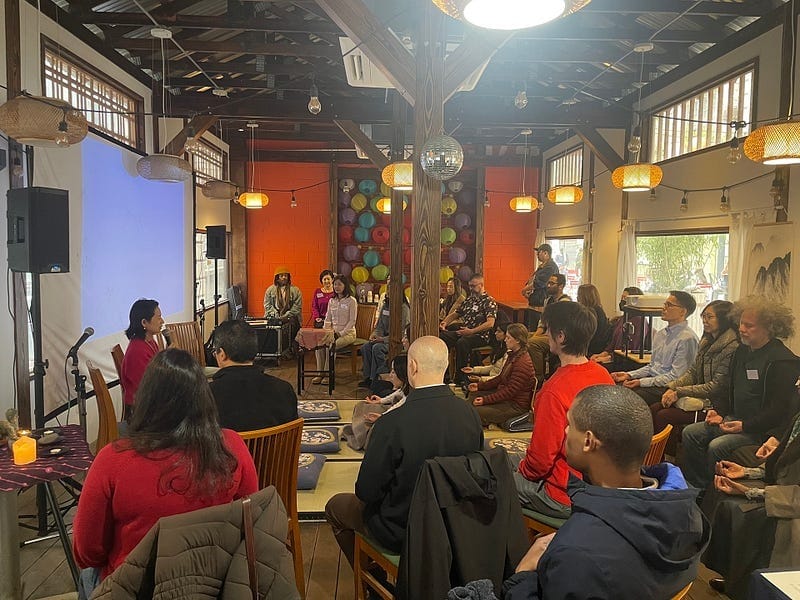
A lot of wellness regiments and products can be expensive to sustain. How can someone go about seeking the support they need in a cost-effective way?
The first step is to find a community, because it’s hard to practice by yourself. When you enter a community make sure that the community is open to supporting someone who doesn’t have many resources. The Brooklyn Zen Center is the community that I grew with and now we have these sliding skills and also scholarships to support BIPOC people as well.