
Meet Masako Shiba, the Curator Bringing Tokyo's Art Scene to Brooklyn
For Masako Shiba, a business card isn't a formality, it's an invitation to connect. "In Japan, we give out business cards like candy," she laughs.

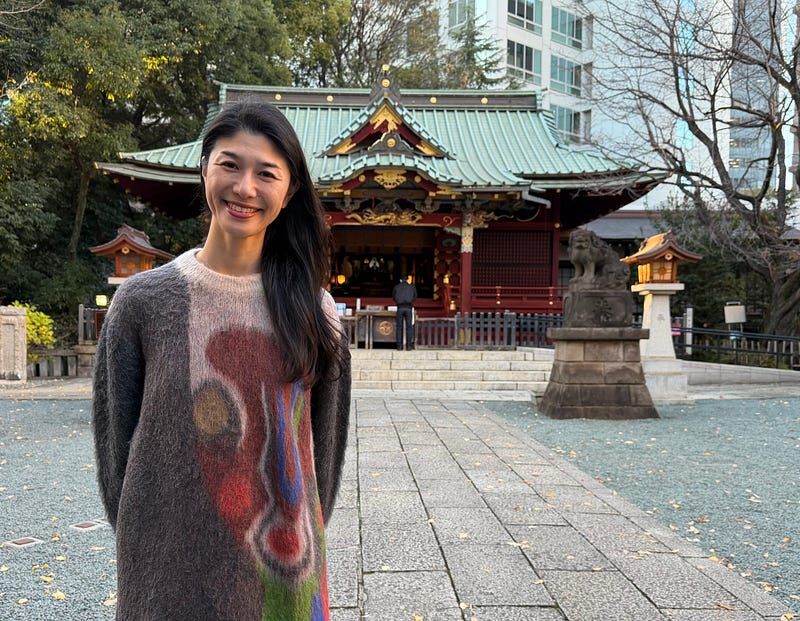
For Masako, a business card is not just a formality; it is an open invitation to connect. “In Japan, we give out business cards like candy,” she laughs. The card reads: Brooklyn Experimental Art Foundation (BEAF). While Masako is quick to note that BEAF is a small New York nonprofit, its overarching mission is anything but. Functioning at the intersection of American and Japanese culture, Masako is a changemaker whose true medium is community. Through BEAF, she is bridging divides, uniting creators, and building a transnational safe space for authentic artistic exchange.
Distance and Perspective: Amplifying Japanese Voices in New York
Masako’s journey as a cultural facilitator began when she moved to the United States for college and fell in love with art history. Living in New York, she quickly discovered a vibrant, unexpected network of Japanese creators.
“When you’re in New York, you meet the most exciting Japanese people,” she notes, observing that they frequently work as artists or curators.
Distance does something profound to perspective. Being outside of Japan allows these creators to do things that might be less visible back home, revealing what is genuinely singular about Japanese creativity. Recognizing this, Masako made it her mission to enhance their unique voices, helping them share stories they might not even fully understand while still residing inside Japan.
Despite Japan being a technologically advanced nation, Masako points out that its contemporary art scene remains largely unrecognized on the global stage. She describes it as a “treasure trove that is yet to be discovered”. BEAF exists to open that vault.
Designing for Proximity: A Brooklyn Hub for Authentic Exchange
To anchor this transnational dialogue, BEAF is currently completing construction of a permanent two-lot space in Brooklyn. But Masako isn’t just building a gallery; she is building an inclusive residential hub designed for human connection.
Supported by the Contemporary Art Foundation, BEAF runs a three-month residency program that brings emerging Japanese artists to New York. The program focuses on supporting artistic research and development, fostering an environment where artists can experience things found only in New York and achieve entirely unexpected breakthroughs. The inaugural resident artist, Sen Takahashi, arrived working in bronze but, surprisingly, pivoted to deeply explore his roots in Korean traditional history. Next September, the foundation will continue this momentum by hosting artists Yuki Harada and Kayako Nakashima.
Because authentic exchanges form stronger connections, the space is built for proximity. Visitors don’t just view the art; they meet the person making it. To further ground the visiting artists and share authentic Japanese wellness culture, BEAF will have a sauna and a cold tub into the space, an essential extension of the meditative mindset she cherishes.
Meditating with Mad Scientists: AI and Ancient Wisdom
Masako’s ethos of advocating for learning and exchange extends into the digital realm. One piece made that clear from the start. Artist Takakurakazuki had created a mandala, a traditional Buddhist cosmological map of the universe, rendered with such precision that engineers stopped and stared. What they saw was a circuit diagram. A firewall. A motherboard. The mandala and the machine, mapped onto each other by coincidence. It was this exhibition that caught the attention of the ALIFE 2025 organizers, who appointed Masako as Art Program Director for the conference.
ALIFE (Artificial Life Conference) is an international interdisciplinary conference series, established in 1987, that explores artificial life, through biology, computation, AI, and questions around consciousness. Its 2025 edition was held in Kyoto, and Masako was tasked with bringing creative experiences into a highly academic space. What she curated reflected a striking pattern: the further you go into new technology, the more the answers start pointing back to ancient wisdom.
To create a space for healthy expression, Masako brought in New York artist Shlumper (Kevin Heisner) to install a 3D-printed Zen garden accompanied by a layered sound environment of onsen field recordings, ambient audio, and live crystal-bowl sound bath. Every morning, scholars gathered in this space to clear their minds before delivering their “mad scientist presentation.”
This intentionality shapes Masako’s defense of AI in art. She champions trailblazers utilizing “hybrid” methods and ethical sources. For the conference she also featured AI poet Sasha Stiles, whose work Heart Mantras was generated between keynotes and projected on the main screen, based on a Large Language Model trained on her own 20 years of writing——demonstrating how a clear and responsible source of data can lead to strong and meaningful workWhen artists respect the technology, Masako observes, their works are the strongest.
Following the Artists: Mud Baths and Coffee Salons
While she builds a home for artists in Brooklyn, Masako travels across Japan. Her secret to finding the country’s best experiences is simple: follow the artists. “They know about the most obscure omatsuri in the middle of nowhere that has like the most exciting history,” she explains.
When asked about the next major Japanese microtrend to hit the US, Masako immediately points to her new found love of onsen and saunas with cold plunges. An avid sauna meditator, she recently visited Beppu, where she goes to four unique onsens in a single day, including transformative co-ed mud baths.
Finally, Masako notes that one of Japan’s most vital everyday community spaces is surprisingly overlooked: coffee shops. “Coffee culture, especially in Tokyo, is actually… I might even say, stronger here than it is in New York,” she says, describing Tokyo’s top-notch shops as functioning “like a salon”. In fact, these spaces are taken so seriously for creative and personal bonding that our interviewer even met his current bandmates through one of them.
Whether she is transforming a Kyoto academic conference, uncovering rural festivals to protect cultural heritage, or connecting New Yorkers with Japanese residents over a Brooklyn sauna, Masako’s true masterpiece is the empathetic, global community she continues to build.
See what BEAF is doing next
BEAF publishes its events on Peatix. If you want to catch an opening, a pop-up, or a cultural exchange event in New York or Tokyo, that is where to look.

How about hosting your own cultural or arts event? Peatix helps organizers publish, promote, and sell tickets without the overhead.
Start free at peatix.com →
Visiting Japan? On Peatix, you will find authentic workshops, seasonal festivals, and community events that offer real cultural connection, not surface entertainment. The perfect way to experience Japan as locals do.
Follow Peatix on Instagram and TikTok, or visit the website to find more events in Japan.